Industry · I·09 / ROBO
Hardware that has to work in the real world, built by people who have shipped it.
Robotics and autonomous systems live where mechanical, electrical and software engineering meet, and where a single weak discipline shows up as field failure. The talent that closes that gap is scarce, cross-disciplinary, and hard to assess from a résumé.
Whether the programme is industrial automation, mobile robotics or an autonomy stack, the founding technical owners set its reliability ceiling. We hire the controls leads, perception engineers and integration owners who carry that risk.
- Domains /
- CONTROLS · AUTONOMY · EMBEDDED · INTEGRATION
- Geo /
- US · IN
- Models /
- DH · C2H · CT · GCC
Capability domains
The capabilities that decide Robotics & Advanced Engineering outcomes.
Each domain is a distinct talent market with its own tooling, judgment and execution risk, and a network we have spent years building.
Controls & Motion
Real-time control, motion planning, kinematics and the model-based design behind stable, performant machines.
Perception & Autonomy
Sensor fusion, SLAM, computer vision and the decision software that lets a system act on its environment.
Embedded & Firmware
RTOS, device drivers, motor control and the firmware living closest to actuators and sensors.
Systems Integration
Bringing mechanical, electrical and software subsystems together into hardware that holds up in the field.
Field reliability
A robot earns trust in a closed loop, not a demo.
Sense, plan, control, act, validate, then field feedback closes the loop. Reliability is decided across the whole loop, not in one box, so we anchor the engineer who owns each stage and screen for the failures that only show up in the field.
- SensePerception Engineer
Sensors drift or degrade; perception fails in conditions a lab never sees.
- PlanRobotics Software
The planner is brittle at the edges of the envelope it was tested in.
- ControlControls Engineer
Control loops go unstable under real load, latency and wear.
- ActEmbedded Firmware
Firmware timing or driver faults make actuation unreliable.
- ValidateTest / Validation
Validation covers the demo, not thousands of real duty cycles.
- Field FeedbackSystems Integration
No loop back from the field, so the same fault repeats across the fleet.
Reliability is decided across the whole loop, so we anchor the engineer who owns each stage.
Demo to product
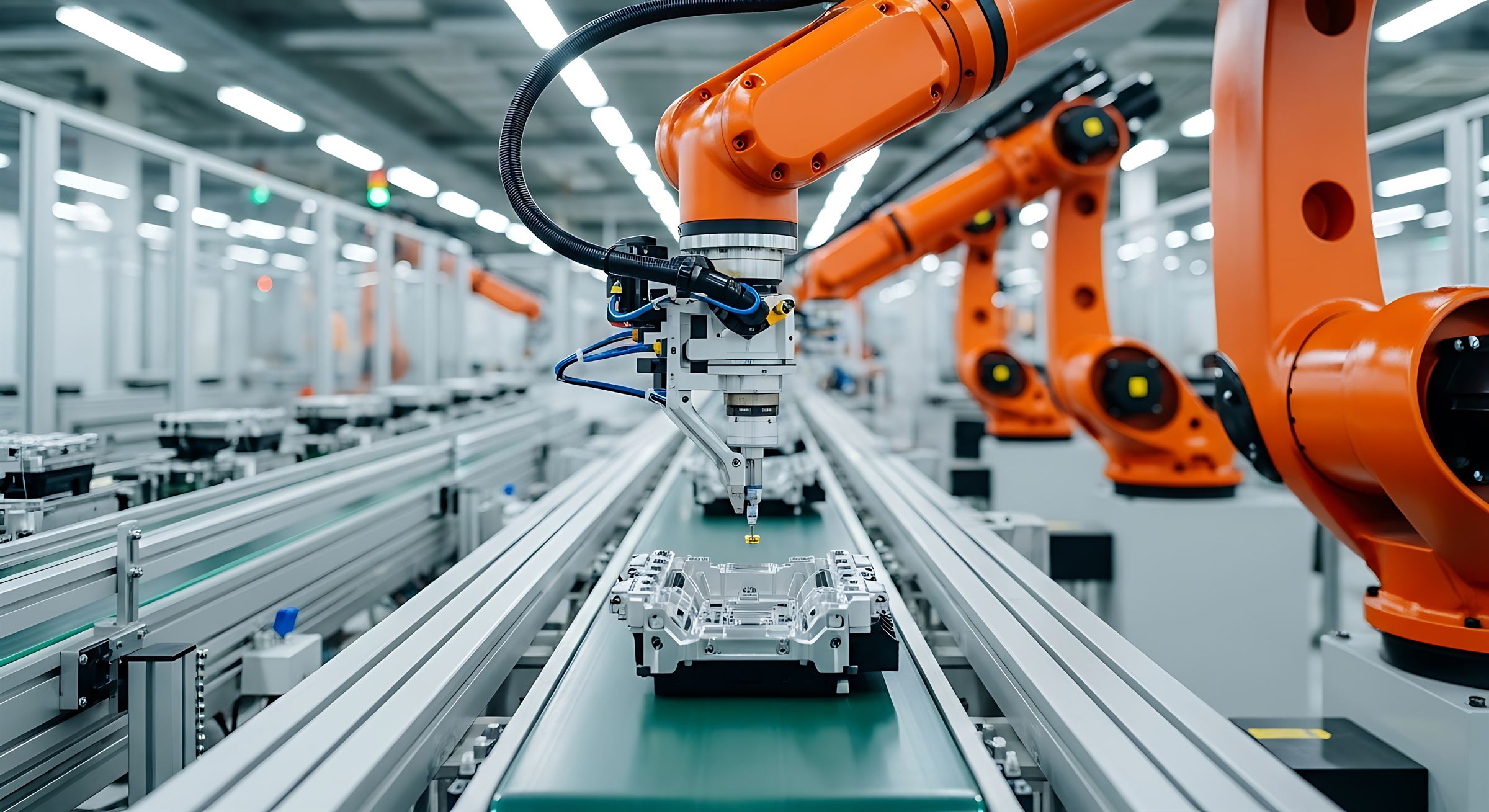
The distance from a demo to a product is engineering discipline.
A robot that works once in a lab is a long way from one that holds up across thousands of real duty cycles. Closing that gap takes controls leads, perception engineers and integration owners who have shipped hardware before.
We screen for that integration judgment, the ability to own a problem from sensor to actuator, not framework familiarity alone.
The constraint
Talent now shapes the outcome directly.
What is changing /
- Autonomy moving from labs into production environments and real duty cycles.
- Demand for engineers fluent across controls, perception and embedded, not one silo.
- Industrial automation and mobile robotics competing for the same scarce talent.
- Reliability and safety expectations rising as robots work alongside people.
What leaders are seeing /
- Few engineers who can own a problem from sensor to actuator.
- Long ramp times for controls and perception specialists.
- Integration gaps that only surface late, in the field.
In robotics, the founding technical owners decide whether the system stays a demo or becomes a product. Talent is what settles which one you get.
How we support leadership
We carry the hard part of the hire.
How we support leadership /
- Translating field-reliability risk into the roles that actually reduce it.
- Defining cross-disciplinary roles precisely, not as a generic “robotics engineer”.
- Screening for real integration judgment, not just framework familiarity.
- Reaching engineers already shipping hardware inside robotics and automation teams.
Outcomes leaders prioritise /
- Systems that hold up outside the lab.
- Cleaner integration across mechanical, electrical and software.
- Faster, more predictable bring-up.
- Lower mis-hire risk on the roles that anchor a programme.
Roles we anchor
The roles that carry the most influence.
A representative view across levels. Every search is scoped to your stack, your level mix and your geography.
Robotics Software Engineer
- Focus
- Software across the robotics stack.
- Responsibilities
- Build and integrate control, perception or navigation modules; support bring-up.
- Skills
- C++/Python, ROS / ROS 2, real-time systems.
Embedded Firmware Engineer
- Focus
- Firmware for motion and sensing.
- Responsibilities
- Develop drivers, motor control and low-level interfaces; debug on hardware.
- Skills
- C/C++, RTOS, motor control, hardware debugging.
Senior Controls Engineer
- Focus
- Real-time control of motion and dynamics.
- Responsibilities
- Design, model and validate control algorithms; own stability and performance.
- Skills
- Control theory, MATLAB / Simulink, model-based design.
Perception / Autonomy Engineer
- Focus
- Sensing and decision-making.
- Responsibilities
- Own perception or planning modules; drive sensor fusion and integration.
- Skills
- SLAM, computer vision, sensor fusion, C++.
Engineering Manager, Robotics
- Focus
- Leading a robotics or autonomy programme.
- Responsibilities
- Own delivery, technical direction and the founding team.
- Skills
- Systems thinking, programme leadership, integration.
Director, Advanced Engineering
- Focus
- Cross-disciplinary engineering strategy.
- Responsibilities
- Set architecture and delivery across mechanical, electrical and software.
- Skills
- Systems architecture, governance, leadership.
The hiring process
Run like engineering, not like luck.
Hiring here demands evaluation beyond credentials and tool lists. Every search runs the same defined stages, calibrated to your priorities and tracked to close.
- 01
Align
Align leadership on the programme’s reliability, safety and schedule priorities.
- 02
Define
Define each role across controls, perception, embedded and integration. Precisely.
- 03
Engage
Engage engineers inside robotics and automation teams who rarely apply openly.
- 04
Assess
Assess integration judgment and engineering depth through real system scenarios.
- 05
Support
Support offer, close and onboarding to protect programme timing.
What leaders gain
Capability-aligned hiring, measured.
Observed outcomes /
- Stronger field reliability.
- Cleaner cross-disciplinary integration.
- Faster, calmer bring-up.
- Lower mis-hire risk on founding roles.
Why teams choose Troika /
- Deep, current networks across controls, perception, embedded and integration.
- We screen on real engineering judgment, not keyword lists.
- US and India coverage for robotics, automation and autonomy teams.
- A defined, repeatable process on every search.
FAQ
Robotics & Advanced Engineering, answered.
Yes, across the full robotics stack, plus systems integration.
Both, including autonomous systems and advanced-engineering teams.
Yes. That is often where we add the most value, starting with the technical anchors.
Both geographies, including nearshore and GCC models.
Start the conversation
Hiring for Robotics & Advanced Engineering? Let’s talk.
Tell us the roles you’re trying to fill and what you’re up against. We’ll come back with who is out there and a plan to land them.